
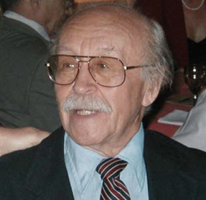
Dr. Novak Zuber (1922–2013) was one of the most prominent Montenegrins in the American scientific diaspora. Born December 4, 1922, at the Hotel Moskva in Belgrade, Zuber’s family origins were from Cetinje. As a young man he joined the Allied Balkan air forces during World War II. After the war he studied in Rome, and in 1947 — driven by his desire for an education — he jumped ship near San Pedro, California. He soon managed to enroll at UCLA, where he completed his engineering degree and earned a doctorate in thermal hydraulics.
Zuber was a pioneer of two-phase flow and heat transfer theory, and the creator of the well-known “drift flux” model used in the safety analysis of nuclear power plants. During his career he worked at General Electric, taught at NYU and Georgia Tech, and later spent a decade and a half as a researcher and regulator at the U.S. Nuclear Regulatory Commission (NRC). He published more than 50 scientific papers and received numerous awards and honors, including the Medal of Honor from the French Nuclear Society in 2005.
After retiring, he remained active as a consultant and donor — among other things, he bequeathed his library and art collection to the National Library of Montenegro in Cetinje. He died on October 3, 2013.